





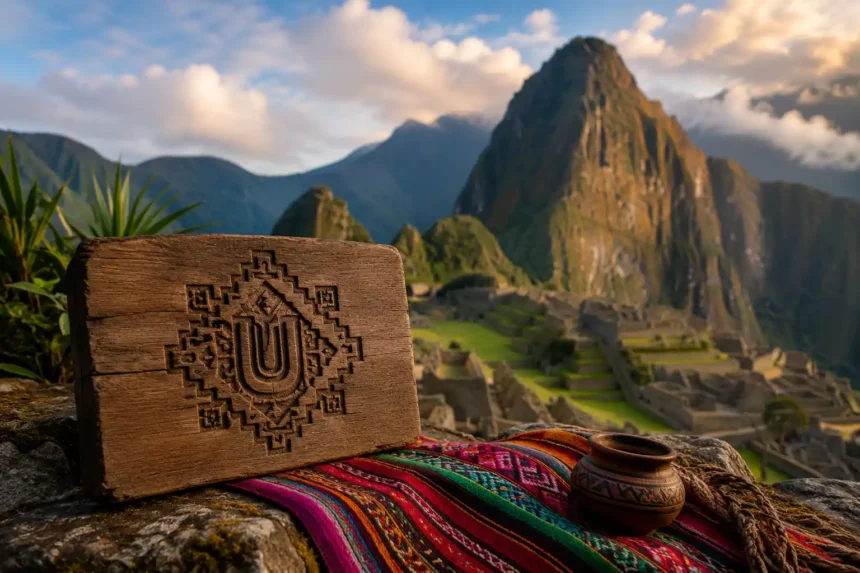
Uncuymaza is a multidimensional concept rooted in Andean indigenous traditions, representing balance, community, reciprocity, and cultural identity. It functions simultaneously as a philosophical framework, a symbolic gathering place, and a modern creative identity used across digital platforms, design, and leadership. Its meaning is not fixed — it adapts based on context, which is exactly what makes it both relevant and widely searched.
- What Is Uncuymaza?
- Origins and Linguistic Roots
- A Place of Gathering
- Cultural Significance in Andean Traditions
- A Place of Abundance
- Uncuymaza in Art, Design, and Creative Expression
- Modern Leadership and Business Thinking
- Harmony with Nature and Sustainable Living
- Digital Age and Online Identity
- Decentralized Platform and Blockchain Innovation
- Creative Industries and Branding
- Practical Applications in Daily Life
- Education, Leadership, and Community Building
- Economic Perspectives and Sustainable Growth
- Why It Is Gaining Popularity in 2026
- Common Misconceptions and Challenges
- The Future of This Concept
- Conclusion
- FAQs
This guide covers everything: where it comes from, what it means culturally, how it appears in art and technology, and why it keeps gaining ground in 2026.
What Is Uncuymaza?
At its core, this concept describes a way of living and thinking that prioritizes collective well-being over individual gain. It originates from Andean cultural traditions in South America and carries values like harmony, reciprocity, and interconnectedness.
The term resists a single dictionary definition — and that’s intentional. Its meaning has expanded over time, crossing from indigenous philosophy into modern branding, digital identity, and artistic expression.
Uncuymaza as a Cultural Philosophy
Within Andean cosmology, this framework reflects a worldview built on balance and mutual support. Communities organized their lives around the concept of Ayni — reciprocal exchange — where cooperation and respect for nature were not optional ideals but daily practices.
This philosophy treats humans as part of an ecological system, not separate from it. Agricultural cycles, spiritual ceremonies, and communal gatherings were all guided by the principle that sustainability and well-being are collective responsibilities.
Uncuymaza as a Symbol of Identity
Beyond philosophy, it functions as a symbol of shared heritage and cultural continuity. For indigenous communities and diaspora groups, it represents belonging — a thread connecting roots, traditions, and collective values across generations.
It answers the question: Who are we, and where do we come from? That sense of purpose and unity is exactly why the term resonates with people seeking grounded identity in a fragmented digital world.
Uncuymaza as a Modern Concept
In contemporary usage, the concept has evolved into a flexible creative identity. Writers, designers, and entrepreneurs use it as a brand name, thematic framework, or artistic inspiration. Its originality and depth make it attractive in competitive digital landscapes where standing out requires more than a catchy word.
Origins and Linguistic Roots
The origins of this Andean concept connect to the highlands of South America, particularly among indigenous communities that spoke Quechua — one of the most widely spoken indigenous languages across Peru, Bolivia, and Ecuador.
Quechua-based cultures built rich philosophical systems around harmony, reciprocity, and sustainable living. While the term itself does not appear in formal historical texts, it aligns closely with concepts passed down through oral traditions, storytelling, and ritual practice across pre-Columbian civilizations.
The absence of a rigid recorded origin is not a weakness. Across indigenous knowledge systems, meaning travels through lived experience rather than documentation. This idea carries that same quality — shaped by human experience and collective cultural imagination rather than a fixed linguistic source.
A Place of Gathering
One of the most compelling interpretations describes it as a communal meeting ground — real or symbolic — where people came together to exchange knowledge, conduct trade, celebrate festivals, and pass down ancestral customs.
In Quechua-speaking Andean communities, such places held deep cultural significance. The Andes highlands contained villages and gathering spots that functioned as centers of cultural unity. In this context, the concept represents:
- A physical or symbolic village where community bonds form
- A space for knowledge exchange and ritual
- A metaphor for resilience, especially as rural communities face modernization
- A reminder that belonging is built through shared experience, not individual achievement
For travelers and researchers, this interpretation frames it as a living landscape — not a relic, but an ongoing cultural presence.
Cultural Significance in Andean Traditions
Andean traditions place spiritual awareness and agricultural balance at the center of community life. This philosophy aligns directly with these values, particularly through its connection to Pachamama (Mother Earth) — the Andean concept of Earth as a living, sacred entity deserving respect and stewardship.
Ceremonies tied to planting cycles, harvest rituals, and ecological balance were not merely symbolic. They reinforced the idea that human prosperity depends on maintaining equilibrium with the natural world. The concept carries that same message: collective responsibility is inseparable from environmental responsibility.
This cultural depth is what separates it from surface-level wellness trends. It offers a coherent ethical framework — one that contemporary sustainability movements increasingly reference.
A Place of Abundance
A lesser-discussed but important interpretation frames this tradition as a place of abundance. This is not abundance in a purely material sense. It describes richness in culture, relationships, shared experiences, and community prosperity.
Abundance here is achieved through cooperation, not competition. Resources are shared, mutual support is expected, and communities thrive through equilibrium rather than accumulation. This perspective directly challenges consumption-driven models of success and aligns closely with modern ethical living philosophies.
Uncuymaza in Art, Design, and Creative Expression
Andean-Inspired Aesthetic and Design Style
This concept has given rise to a recognizable design aesthetic that blends indigenous South American motifs with contemporary minimalism. Designers working within this movement draw from:
- Earthy palettes and natural textures
- Handcrafted textiles with symbolic geometric patterns
- Sustainable materials that honor ecological responsibility
- Décor rooted in ancestral craft traditions
What distinguishes this aesthetic is its narrative depth — every object or space carries cultural meaning rather than serving purely decorative purposes. It appeals to consumers and creators who value authenticity and heritage preservation over mass-produced aesthetics.
Artistic Expression and Visual Identity
Artists working with this theme use symbolism as a primary visual language. Colors, shapes, and imagery are chosen to represent balance, spiritual connection, and community — not for visual novelty alone.
Wall art, digital designs, and home décor inspired by this tradition communicate a sense of cultural storytelling. The visual identity bridges tradition and innovation, making it relevant to both heritage-focused and forward-thinking audiences.
Modern Leadership and Business Thinking
Core Leadership Principles
Leadership inspired by these values prioritizes collective well-being over short-term metrics. Core principles include:
| Principle | Application |
| Balance | Decision-making that weighs social, environmental, and financial outcomes |
| Transparency | Open communication with all stakeholders |
| Community-first | Prioritizing community impact alongside organizational goals |
| Long-term thinking | Sustainable strategy over quarterly profit |
| Empathy | Understanding the human cost of every decision |
These are not abstract values. Leaders who apply them build organizations that attract trust, loyalty, and talent — particularly from younger workforces who prioritize purpose.
Business and Organizational Applications
Organizations applying these principles reframe themselves as interconnected parts of a broader social and ecological system. This directly addresses challenges like climate change accountability, social inequality, and ethical business practices.
Regenerative business models, community engagement strategies, and transparent supply chains all reflect this philosophy in practice. Entrepreneurship guided by these values produces companies that are harder to replicate because their identity is built on something deeper than product features.
Harmony with Nature and Sustainable Living
Sustainability sits at the heart of this philosophy. Traditional farming methods in Andean communities worked with natural cycles rather than against them — conserving resources, rotating crops, and maintaining ecological balance without depleting the land.
Modern environmental movements have begun drawing on exactly these principles. The growing recognition that extraction-based economics creates long-term damage has pushed communities, businesses, and policymakers toward models that mirror what this concept has always described: living within natural limits, sharing resources equitably, and measuring progress by community health rather than growth rates alone.
Digital Age and Online Identity
Across social media platforms and online communities, this concept has taken on a second life as a digital identity marker. Creators, developers, and artists adopt it as a username, pseudonym, or artistic alias — drawn to its authenticity, uniqueness, and cultural depth.
Digital communities exploring sustainability, indigenous knowledge, and mindfulness have embraced the term as shorthand for a particular kind of rooted creativity: one that values transformation and hybridity without losing its grounding in ancestral wisdom.
This online presence also raises important questions about representation and cultural sensitivity — topics that responsible creators engaging with the idea actively address.
Decentralized Platform and Blockchain Innovation
One of the more unexpected modern applications connects the concept to decentralized digital platforms built on blockchain technology. The alignment is conceptually strong: blockchain-based systems emphasize transparency, ownership, and collaboration — values that mirror the traditional emphasis on fairness and reciprocity.
These platforms give artists, musicians, and developers control over their work without relying on centralized gatekeepers. The community-driven spirit of the original idea finds a direct parallel in decentralized systems where shared success replaces winner-takes-all models.
Creative Industries and Branding
Branding and Naming Potential
From an SEO and branding standpoint, this term is a strong candidate for a brand name or product identity. Key advantages include:
- High memorability due to its distinctive sound and structure
- Low search competition, improving Google ranking potential
- No pre-existing brand associations, giving full creative control
- Broad applicability across lifestyle brands, tech startups, and creative ventures
For a marketing campaign or social media handle, it carries immediate intrigue without requiring explanation — the name itself invites curiosity.
Creative Industries Applications
Writers, designers, and musicians use this framework as a thematic anchor that connects individual creativity to shared human experiences. Storytelling rooted in cultural history, values, and heritage preservation resonates with audiences increasingly tired of content without meaning.
In creative industries, the ability to anchor work in something authentic — rather than manufactured — is a competitive advantage. This concept provides exactly that foundation.
Practical Applications in Daily Life
Applying these principles does not require a philosophical overhaul. Practical entry points include:
- Journaling and reflection: Using daily writing to assess whether personal goals align with community values
- Mindful routines: Structuring habits around balance rather than productivity alone
- Workspace organization: Creating environments that reduce overwhelm and support mental clarity
- Relationship practices: Approaching empathy and self-awareness as daily disciplines, not occasional exercises
- Meditation: Using contemplative practices to reconnect with purpose and emotional stability
These applications are accessible regardless of cultural background. The principles translate universally because they address fundamental human needs — belonging, purpose, balance, and well-being.
Education, Leadership, and Community Building
Educational systems that integrate these values emphasize collaboration, critical thinking, and cultural awareness alongside academic achievement. This holistic approach prepares students not just for careers but for responsible participation in communities.
Community development guided by this philosophy prioritizes inclusive decision-making, social responsibility, and diversity. Leaders who operate from this framework build stronger, more resilient organizations because they center collective well-being rather than top-down authority.
Economic Perspectives and Sustainable Growth
From an economic standpoint, this worldview challenges the assumption that growth requires extraction. Ethical practices, fair resource distribution, and long-term community investment produce more stable outcomes than short-term profit optimization.
Businesses built on transparency and community impact increasingly outperform competitors on trust and loyalty metrics — particularly among consumers who factor values into purchasing decisions. The regenerative economic model implied here is no longer niche; it is fast becoming a mainstream expectation.
Why It Is Gaining Popularity in 2026
Several converging factors explain the rise of this concept as a keyword and cultural idea in 2026:
- Growing demand for identity-driven branding in saturated digital markets
- Increased global interest in indigenous wisdom and sustainability
- Low search competition makes it highly attractive for SEO content strategies
- Its adaptability across culture, technology, art, and leadership
- Younger audiences actively seek concepts that combine authenticity with innovation
Its flexibility is its greatest strength. A term that can simultaneously describe a Peruvian village, a leadership framework, a design aesthetic, and a blockchain platform has an unusually broad relevance footprint.
Common Misconceptions and Challenges
Several myths surround this idea that are worth addressing directly:
- It is not a fixed, officially documented term. Its strength comes from adaptability, not rigid definition.
- It is not exclusive to any single culture. While its roots are Andean, its principles are universally applicable.
- It does not require elaborate ceremonies or rituals. Core values like balance and mindfulness can be practiced simply.
- It is not just a museum artifact. Its relevance to modern life, digital culture, and business is active and growing.
The ambiguity that sometimes creates confusion is also the source of its open-endedness — the quality that allows individuals and communities to make it meaningfully their own.
The Future of This Concept
The trajectory points toward continued expansion across art, technology, education, and leadership. As global awareness grows, the idea is likely to develop more standardized reference points while retaining its core adaptability.
Its ability to bridge tradition and innovation — to remain grounded in ancient wisdom while functioning within blockchain platforms and digital creative communities — makes it genuinely unusual among emerging cultural concepts. Worldwide adoption will likely deepen rather than dilute its meaning, as more communities find their own relevant entry point into what it represents.
Conclusion
Uncuymaza connects ancient Andean philosophy to the most pressing questions of modern life: how to build sustainable communities, create authentic identities, lead with purpose, and live in balance with the natural world. Its cultural heritage gives it depth; its adaptability gives it reach.
Whether encountered as a design aesthetic, a leadership principle, a digital identity, or a philosophical framework, the concept consistently points toward the same core values — reciprocity, harmony, creativity, and collective well-being. Those values are not trends. They are enduring, and so is the idea built around them.
FAQs
FAQ 1: What is Uncuymaza?
It is a multidimensional concept with roots in Andean indigenous traditions. It represents balance, community, creativity, and cultural identity. In modern contexts, it is also used in digital branding, design, and leadership frameworks.
FAQ 2: Is it a real place or a concept?
It is both. Some interpretations describe it as a symbolic village or communal gathering place in the Andes, Peru. More broadly, it functions as an abstract idea representing cultural unity, belonging, and shared community experience.
FAQ 3: Where does the term come from?
Its origins are connected to the Andean region of South America, with linguistic and cultural ties to Quechua-speaking indigenous communities. The term was passed down through oral traditions rather than formal written records.
FAQ 4: What does it mean culturally?
Culturally, it represents balance, reciprocity, gratitude, and harmony with nature. It aligns with Andean concepts like Pachamama and Ayni — frameworks built on ancestral wisdom, collective responsibility, and ecological stewardship.
FAQ 5: How is it connected to modern technology?
It has been associated with decentralized platforms and blockchain-based systems that prioritize creator ownership, transparency, and collaboration — values that directly mirror its traditional emphasis on fairness and reciprocity.
FAQ 6: Why is it becoming popular online?
Its uniqueness, low search competition, and adaptability make it attractive for SEO content and digital identity branding. It also aligns with growing interest in wellness, indigenous wisdom, and lifestyle concepts that offer depth beyond surface-level trends.
FAQ 7: Can it be used as a brand name?
Yes. Its originality, memorability, and lack of existing brand associations make it strong for tech startups, lifestyle brands, and creative ventures. It ranks well for low-competition keywords and carries a natural sense of cultural depth and purpose.
FAQ 8: How can these principles be applied in everyday life?
Practical applications include journaling, meditation, mindful routines, and self-awareness practices. The approach encourages emotional stability, balanced personal goals, and empathy in relationships — none of which require specialized knowledge to begin.