






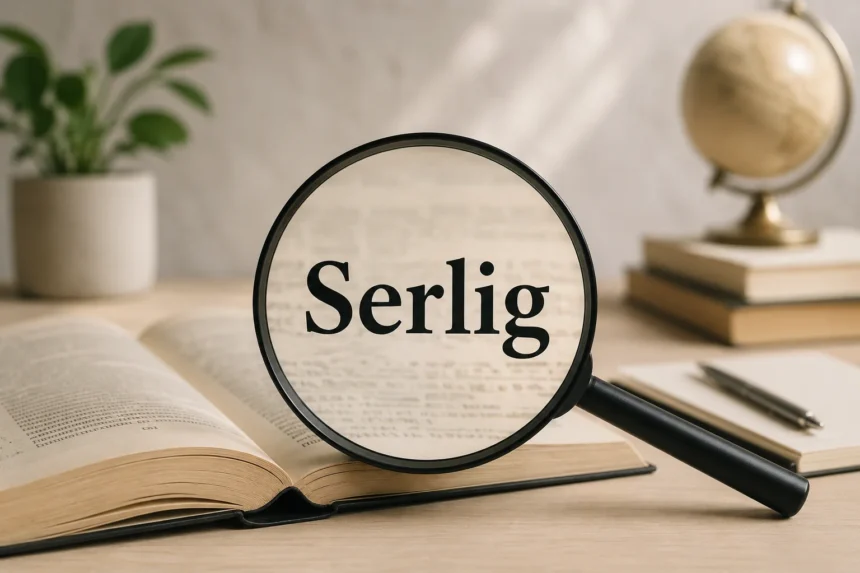
Serlig is a term with two distinct identities depending on where you encounter it. In one context, it refers to a modern digital platform built for content creation, community building, and interest-based interaction. In another, it functions as a conceptual term rooted in North Germanic languages, describing something quietly distinct, intentional, and authentic. Both uses are legitimate — the confusion between them is widespread and worth addressing directly.
- What Is Serlig? Definition and Origins
- Core Meaning Explained Simply
- Key Features of Serlig as a Digital Platform
- Who Should Use It?
- The Philosophy of Intentional Living
- Applications in Business, Leadership, and Innovation
- The Connection with Technology
- Compared to Related Concepts
- Use in Branding and Creative Industries
- The Future Outlook
- Conclusion
- FAQs
What Is Serlig? Definition and Origins
The word traces back to North Germanic languages, where terms like særlig — documented in the Den Danske Ordbog — carry the meaning of something special, distinct, or significant in a specific context. Modern usage has expanded well beyond that linguistic origin.
Today, the term operates across two separate lanes:
- As a concept — a descriptor for intentional, authentic expression and identity
- As a platform — a content and community system built using AI infrastructure
Neither interpretation is wrong. The problem is that most websites present only one version, which is why so much misinformation exists around this term. Some sources call it a lifestyle tool. Others compare it to Udemy or Skillshare. Neither description fits either version accurately.


The Linguistic Root of the Word
The Scandinavian root særlig carries a practical meaning — it describes something that stands out not through volume or performance, but through genuine distinction. This is not a borrowed word from technology. It entered digital discourse organically as people sought language for intentional online behavior.
The modern interpretation keeps that core meaning: something carries depth, honesty, and quiet relevance — the opposite of noise.

Why There Is So Much Misinformation About Serlig
Multiple websites have applied different definitions without cross-referencing. Some classify it as a productivity tool. Others describe it as a course-sharing platform similar to Skillshare or Udemy. A few present it as an abstract philosophy.
The actual picture is simpler: this concept exists as both a platform and a conceptual framework — and conflating the two creates the confusion readers encounter. AI-generated content has amplified this problem by repeating inaccurate descriptions at scale.
Core Meaning Explained Simply
At its simplest, the term describes depth without noise. Something fits this definition when it communicates meaning clearly, without seeking attention or performing for an audience.
It is not about minimalism for aesthetic reasons. It is not a trend. The concept carries these core qualities:
- Authentic — honest and real, not curated for performance
- Subtle — not attention-seeking or dramatic
- Thoughtful — expressed with deliberate intent
- Distinct — quietly different from generic output
- Context-based — meaning shifts with situation and purpose
This makes it useful in communication, branding, creative work, and personal expression — wherever clarity and honest intent matter more than visibility.
Key Features of Serlig as a Digital Platform
As a platform, the concept operates differently from traditional social media. It targets specific pain points: irrelevant content, shallow interactions, and limited professional tools.
Advanced Content Creation Tools
The editor supports text-based, video-based, and graphical content formats. Users get access to headings, bullets, numbering, bold, italic, and underline formatting — tools that most social platforms do not offer natively.
This matters for writers and professionals who need structured, long-form output rather than short-form posts.
Interest-Based Content Visibility
The platform’s content display system is managed by AI. Instead of showing diversified feeds, it maps content to user interest profiles. Someone focused on Machine Learning only sees content aligned with that subject.
This directly reduces algorithmic noise — a persistent problem on traditional platforms where relevancy decreases the larger a feed becomes.
Interaction System and Community Building
The interaction model connects users with people whose interests match their own, not just anyone with a profile. This creates conditions for genuine knowledge sharing rather than passive consumption.
Groups can form around specific topics. Collaborations emerge from within those communities. Ecosystem engagement stays relevant because the connection system filters by intent.
Digital Presence and Professional Growth
Professionals use the platform to build a portfolio, demonstrate expertise, and attract business inquiries without paid advertising. An AutoCAD expert, for example, can publish work, engage with a relevant audience, and build an online presence that generates inbound project opportunities.
The platform provides a roadmap that many professionals lack in broader networks.
Who Should Use It?
The platform serves several distinct user types, each with different goals.
Content Creators and Writers
Content creators benefit from the structured editor, the interest-based content visibility system, and lower competition compared to saturated platforms. Writers and bloggers gain access to professional writing tools and reach audiences already interested in their subject area.
Short-form and long-form content are both supported. The audience quality — filtered by interest — tends to produce better engagement than unfiltered feeds.
Students, Learners, and Professionals
Students can join communities, participate in discussions, and access content created by verified practitioners in their field. Professionals and experts use the platform to establish thought leadership, connect with peers, and develop a professional roadmap that traditional platforms rarely support.
The Philosophy of Intentional Living
Separate from the platform, the term describes a three-part philosophy:
- Innovation with Intention — progress guided by purpose, not speed
- Mindfulness with Momentum — awareness that does not stall action
- Growth with Gratitude — advancement that accounts for emotional fulfillment
This framework positions the concept between serenity and logic — not a rejection of ambition, but a redirection of it. In 2025, burnout, information overload, and chronic overwork have made this kind of balanced mindset practically valuable, not just philosophically appealing.
Applications in Business, Leadership, and Innovation
Organizations applying these frameworks report a shift from competition toward collaboration, and from velocity toward vision. Leaders who operate from this mindset focus on people before profits and build corporate cultures around empathy rather than pressure.
The practical formula: Empathy + Innovation = Lasting Impact
In 2025, businesses integrating these principles into leadership training and employee wellness programs find that motivated, mindful teams consistently outperform those driven by fear or speed-based metrics.
The Connection with Technology
The relationship between this concept and technology is not adversarial. The framework does not reject digital tools — it redefines how they are used.
Applications include AI-driven meditation systems, digital wellness apps, and mindful productivity tools designed to enhance human creativity rather than replace it. The approach advocates for slow tech — conscious, minimal engagement with digital environments rather than reactive, constant consumption.
Cloud computing, software solutions, and virtual reality are all compatible with this approach when implemented with intentionality. By 2030, AI ethics and sustainable digital design are likely to reflect many of these values directly.
Compared to Related Concepts
| Concept | Difference |
| Authenticity | Adds calm, subtle depth — not just honesty |
| Minimalism | Includes emotional meaning, not just reduction |
| Mindfulness | Emphasizes purposeful engagement, not only awareness |
| Uniqueness | Focuses on quiet distinction, not visible differentiation |
| Creativity | Values clarity and intent over complexity |
The key distinction: related concepts address one dimension. This framework integrates several, making it applicable across personal identity, digital behavior, and organizational practice simultaneously.
Use in Branding and Creative Industries
For branding, the term’s neutrality and flexibility make it attractive. A brand built around these principles does not need to shout. It builds recognition through consistency, clarity, and authentic alignment with audience values.
Creative agencies, designers, and artists connect with the concept because it validates meaning over decoration. Digital content that applies these principles prioritizes genuine expression over flashy production — which increasingly outperforms high-production content in engagement quality.
The approach works across technology startups, content platforms, and creative services. The visual identity and consistent messaging principles that underpin an aligned brand are the same ones that produce long-term audience trust.
The Future Outlook
By 2030, analysts expect the concept to influence leadership models, AI ethics frameworks, and sustainable business practices at an institutional level. Some education systems are already incorporating experiential and reflective learning models that align with these principles.
The platform side continues to grow through AI-driven upgrades, expanding content management capabilities, and a development team adding features based on community feedback. Monthly visitor counts have grown rapidly since launch — a signal that interest-based content systems are filling a gap left by traditional social media.
Cultural resonance will sustain both interpretations of the term well beyond short-term trend cycles.
Conclusion
Serlig offers something concrete: a framework for operating with less noise and more clarity — whether as a platform you use or a principle you apply. The practical next step is simple. Pick one context — platform or philosophy — and test it directly. Use the platform to build a presence in your field, or apply the communication principles to your next piece of content. Either path produces measurable results faster than abstract exploration.
FAQs
What does this term mean in simple terms?
It describes something quietly distinct, honest, and contextually meaningful — the opposite of performative or noisy communication. The meaning shifts slightly depending on whether it refers to a platform or a conceptual framework.
Is it a real word found in dictionaries?
Linguistically yes, in North Germanic languages. The Scandinavian term særlig, documented in Den Danske Ordbog, carries a comparable meaning. Modern usage has expanded the definition well beyond its traditional linguistic roots.
Is it a product, platform, or concept?
Both. It functions as an AI-built digital platform combining content creation, community building, and digital ownership. It also operates as a conceptual framework for intentional identity and expression — separate from any technology product.
How is it different from authenticity or mindfulness?
Authenticity covers honesty. Mindfulness covers awareness. This framework integrates both while adding purposeful engagement, quiet distinction, and context-dependent meaning — making it applicable online and offline simultaneously.
Who benefits most from the platform?
Content creators, writers, bloggers, professionals, and students gain the most. The interest-based content system and professional tools give them better audience quality, stronger portfolio options, and lower competition than traditional platforms offer.
Can businesses adopt these principles?
Yes. In 2025, companies are integrating these principles into leadership training, sustainability strategies, and employee wellness programs. The framework supports ethical innovation and corporate cultures built around adaptability and empathy.
How do you apply this in everyday life?
Start with morning reflection before reactive screen use. Set intentional goals for each day. Take mindful pauses before responding to messages. Use technology as a deliberate tool rather than a default reflex.
What is the future outlook beyond 2025?
By 2030, the concept is expected to shape AI ethics, leadership models, and sustainable business practices. Educational institutions are already adopting aligned learning models. Cultural resonance is projected to grow as digital transformation accelerates.