





Some names carry entire worlds inside them. Beit Bart is one of those names. It sounds simple at first — just two short words — but once you start pulling at its threads, you uncover ancient languages, forgotten traditions, and a cultural identity that still shapes real communities today.
- What Is Beit Bart? (Meaning & Linguistic Breakdown)
- Historical Background of Beit Bart
- Cultural Significance of Beit Bart
- Architecture and Design of Beit Bart Through the Ages
- Beit Bart as a Cultural and Community Institution
- Famous Landmarks and Attractions in Beit Bart
- Local Culture, Cuisine, and Festivals
- Beit Bart in Modern Life and Practice
- Why Beit Bart Attracts Attention Today
- What Beit Bart Teaches the Modern World
- Conclusion
- FAQs
People search for this term for different reasons. Some encounter it as a place name. Others come across it in discussions about Semitic heritage or Palestinian history. A few find it linked to Orthodox Jewish senior living in Jerusalem. All of them are right, in a way. This name carries multiple layers, and understanding each one gives you a genuinely richer picture of how language, home, and community intersect across centuries.
This guide covers every important dimension of Beit Bart — from its linguistic roots to its architectural heritage, its role as a living institution, and what it means in modern life.
What Is Beit Bart? (Meaning & Linguistic Breakdown)
The name splits cleanly into two ancient words, each carrying significant historical weight.

Beit comes from Semitic languages — primarily Hebrew and Arabic — where it means house or home. But calling it just a “house” undersells it. In ancient usage, a beit wasn’t simply a building. It described a household, a family unit, a lineage, and sometimes a sacred institution. You can see this meaning preserved in famous place names: Bethlehem means House of Bread, and Bethel means House of God. These weren’t just locations — they were identity markers.
Bart traces back to Aramaic, where it historically carried the meaning of son or functioned as a family name. In naming traditions across the Levant, attaching a family identifier to a place was common practice. It marked that space as belonging to a specific lineage — a declaration of ancestry, continuity, and descent.
Combined, the name translates most naturally as House of the Son of Bart — a space defined by multi-generational roots and family identity, not just physical structure.
Etymology of “Beit”
The word beit appears across thousands of years of Semitic linguistic history. In Hebrew, it forms the second letter of the alphabet (Beth), a symbol associated with dwelling and shelter. In Arabic, bayt carries the same core meaning, appearing in poetry, architecture, and place names throughout the Arab world.
Beyond its literal definition, beit carried spiritual weight in ancient contexts. Temples, schools, and community gathering spaces were all described using this word. A beit midrash (house of study) in Jewish tradition, for example, was never just a room — it was a space for intellectual growth, shared learning, and cultural transmission.
Etymology of “Bart”
The Bart component functions as a personal or family name rooted in Aramaic tradition. In historical naming conventions across the Levant, a beit was often named after the family or individual who established it. This gave the space a commemorative purpose — preserving the memory of a person or lineage through the physical structure itself.
The ancestral seat dimension of Bart connects the name to ideas of descent, legacy, and continuity. Families didn’t just live in these spaces; they became identified with them across generations.
Historical Background of Beit Bart
The history attached to this name stretches back well before written records became common across the Middle East.
Ancient Origins and Archaeological Evidence
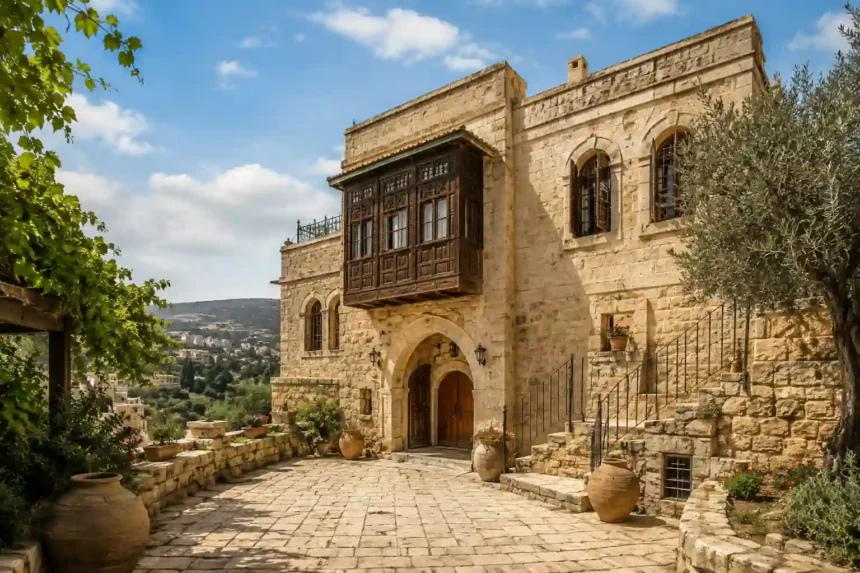
Archaeological findings from across the Levant point to settlements built during the Iron Age that share the structural and cultural DNA associated with the beit tradition. These communities constructed homes using locally sourced stone, clay, and timber. The architecture was functional but deeply intentional.
Thick stone walls kept interiors cool during hot summers and retained heat through cold winters. Open courtyards at the center of family compounds served as shared spaces for cooking, childcare, and daily communal life. Flat rooftops doubled as gathering areas during harvest seasons and warm evenings.
Every design choice carried meaning. The entryway signaled hospitality. The inner courtyard represented the family’s shared life. The structure as a whole communicated identity to the surrounding community.
Byzantine and Ottoman Influences
As empires rose and fell across the region, the physical spaces associated with Beit Bart absorbed new architectural layers without losing their core identity.
During the Byzantine period, arched doorways, carved stone motifs, and decorative tilework became common features. Churches and religious spaces influenced residential architecture, introducing new visual vocabularies alongside older Semitic building traditions.
The Ottoman era added another dimension. Town squares anchored by communal fountains became extensions of the family home — gathering points where daily commerce, social exchange, and cultural life intersected. Narrow cobblestone streets connecting these spaces created natural environments for community interaction that reinforced the social principles the beit tradition was built on.
Cultural Significance of Beit Bart
The cultural meaning embedded in this tradition goes far beyond architecture or etymology. It shaped how entire communities organized themselves, transmitted knowledge, and understood their place in the world.
Oral Tradition and Storytelling
Before written records became widespread, elders served as the primary keepers of cultural memory. Through stories told around communal fires and shared meals, younger generations absorbed their community’s values, history, and identity. This wasn’t informal entertainment — it was structured cultural transmission.
The beit was the natural setting for this process. Grandparents lived alongside grandchildren. Knowledge passed through daily interaction rather than formal instruction. This model of oral transmission kept cultural knowledge alive for centuries without requiring written documentation.
Craftsmanship and Artisan Traditions
Craft skills moved through families in the same way stories did. Weaving, pottery, metalwork, and woodcarving passed from parent to child across generations. Each craft carried not just technical knowledge but also the aesthetic values and cultural patterns of a specific community.
A piece of handwoven textile or an intricately thrown pot wasn’t just a useful object — it was a tangible expression of identity. These items connected their makers and users to a lineage of practice and meaning that stretched back centuries.
Architecture and Design of Beit Bart Through the Ages
The built environment associated with Beit Bart tells a layered story of cultural adaptation and continuity.
Early structures prioritized harmony with the natural environment. Stone walls provided natural insulation. Exposed timber beams and natural light defined interior spaces. The materials weren’t chosen for aesthetic reasons alone — they reflected deep familiarity with local landscapes and seasonal patterns.
As Byzantine influences spread across the region, arched doorways and carved motifs added new visual depth to existing structural traditions. Decorative tilework became a signature element — beautiful and culturally expressive, but also durable enough to survive centuries of use.
The Ottoman era introduced communal design at a larger scale. Fountains, market squares, and shared gathering spaces extended the social logic of the beit outward into entire neighborhoods. Individual homes and public spaces became part of a continuous cultural environment.
Today, renovated family compounds inspired by this tradition serve as guesthouses, cultural centers, and community meeting spaces. Architects designing these structures use sustainable materials, exposed stone, and timber beams to preserve historical character while creating functional spaces for modern living.
Beit Bart as a Cultural and Community Institution
The Beit was never purely a private space. In communities across the Middle East and Mediterranean, homes functioned as social institutions serving the extended family and the surrounding neighborhood.
Hospitality as a Core Value
Welcoming a stranger wasn’t simply good manners — it was a moral obligation. Offering food, shelter, and genuine engagement to visitors demonstrated the family’s values publicly and reinforced the community’s shared identity.
This principle of open generosity shaped how these spaces were physically designed. Entryways were wide and welcoming. Guest rooms occupied prominent positions. Food preparation areas were scaled to serve far more than the immediate family.
Hospitality, in this context, was also a form of social communication — a visible declaration of community membership and shared values.
Resource Sharing and Community Resilience
Beyond hospitality, communities built around the Beit tradition practiced systematic resource sharing. Tools, labor, knowledge, and food moved between households according to need rather than strict ownership.
This collective approach created remarkable resilience.Communities built on mutual support principles handled droughts, conflicts, and economic hardships more effectively than those focused solely on individual interests. The logic was straightforward: shared resources extended survival capacity for everyone involved.
Famous Landmarks and Attractions in Beit Bart
Visitors to the area associated with Beit Bart encounter a layered physical environment where history remains visible and accessible.
| Landmark | Significance |
| Ancient Church | Byzantine-era architecture, intricate frescoes, centuries of religious history |
| Old Marketplace | Traditional artisan crafts, handmade goods, living commercial culture |
| Natural Reserve | Rolling hills, lush greenery, hiking trails, scenic picnic areas |
| Town Square & Statue | Community gathering point, historical figures, local identity marker |
| Local Museum | Archaeological artifacts, exhibits from multiple historical periods |
The stone buildings scattered throughout the area display intricate carvings that reflect different periods of cultural influence. Each structure functions simultaneously as a historical document and a living space.
Local Culture, Cuisine, and Festivals
Daily life in communities connected to this tradition revolves around food, celebration, and seasonal rhythms.
Traditional Dishes and Street Food
The cuisine reflects centuries of agricultural practice and cultural exchange. Savory stews slow-cooked with locally sourced spices form the backbone of traditional meals. Freshly baked bread accompanies almost every dish. Street vendors offer grilled meats, spiced pastries, and sweets made from nuts and honey — flavors that connect present-day visitors directly to historical culinary traditions.
Local markets supply fresh produce from nearby farms, maintaining agricultural connections that have defined the region’s food culture for generations.
Celebrations and Festivals
The festival calendar mirrors the agricultural year. Harvest celebrations bring communities together around colorful markets, live music, and traditional games. Spring festivals involve folk dances and communal feasting. Religious observances draw both residents and visitors into solemn rituals that have continued across centuries without significant interruption.
These events aren’t staged for tourists — they’re active expressions of living cultural pride.
Beit Bart in Modern Life and Practice
The concept operates today across several distinct but interconnected forms.
Modern Physical Spaces
As a physical location, it appears as:
- Senior living facilities honoring Orthodox Jewish traditions in Jerusalem
- Cultural centers hosting workshops, art exhibitions, and community programs
- Heritage sites attracting travelers seeking authentic historical experiences
- Boutique hotels and guesthouses built within restored stone compounds
These spaces share a commitment to preserving cultural identity while adapting to contemporary needs. Eco-friendly initiatives and sustainable building practices increasingly shape how these environments are developed and maintained.
Symbolic and Diaspora Significance
For diaspora communities worldwide, the concept functions as a cultural touchstone. Migration separates families from their geographic roots, but the symbolic meaning of beit — home as identity, lineage as continuity — travels with them.
Online communities dedicated to ancestral research and cultural preservation actively use this concept as a framework for reconnecting with heritage. Social media platforms carry photographs, stories, and discussions that keep these traditions alive across borders and generations.
Why Beit Bart Attracts Attention Today
Globalization has disrupted traditional family structures and community bonds at a scale that earlier generations couldn’t have anticipated. Urban life, digital culture, and migration have fragmented the close-knit community environments where traditions like this naturally thrived.
In that context, the idea of a home defined by lineage, shared values, and community responsibility speaks directly to something many people feel is missing. Educational institutions increasingly incorporate heritage concepts like this into curricula focused on cultural literacy, ethics, and community responsibility.
The values embedded in this tradition — respect for elders, shared responsibility, genuine hospitality, and the deliberate preservation of cultural knowledge — offer a practical framework that remains relevant in contemporary life.
What Beit Bart Teaches the Modern World
The deepest lesson this tradition offers isn’t nostalgic. It’s practical.
Communities that prioritize shared knowledge, mutual support, and the deliberate transmission of cultural memory to younger generations build a kind of resilience that purely individual frameworks can’t replicate. The beit model recognized that identity isn’t just personal — it’s relational, generational, and spatial.
Rooted living — knowing where you come from, who built what you inhabit, and what values shaped those who came before you — provides psychological grounding that proves difficult to manufacture artificially. That grounding is what this name, in all its dimensions, continues to represent.
Conclusion
Beit Bart is not a simple term. Depending on context, it describes an ancient naming tradition rooted in Semitic linguistics, a living Palestinian village, a Jerusalem senior care facility, or a philosophical framework for understanding home and heritage. All of these dimensions are real, and all of them connect back to the same core idea: a space defined by family, lineage, community, and the conscious preservation of identity across time.
What makes this concept worth understanding isn’t just historical curiosity. It’s the recognition that the values embedded in this tradition — hospitality, collective resilience, oral transmission of knowledge, and the careful maintenance of cultural memory — remain genuinely useful frameworks for navigating a fragmented modern world.
Whether you encounter this name through travel, research, or cultural exploration, the meaning behind it rewards serious attention.
FAQs
FAQ 1: What does Beit Bart mean in English?
The most accurate translation is House of the Son of Bart. Beit comes from Hebrew and Arabic, meaning house or home. Bart traces back to Aramaic, where it carried the meaning of son or family identifier. Together, the name points to a space defined by lineage, ancestry, and multi-generational family identity.
FAQ 2: Where is Beit Bart located?
The name appears in multiple geographical contexts. It is associated with villages in the Palestinian hills of the Levant region, as well as with a specific senior living facility in Jerusalem. Its broader cultural presence extends across the Middle East and among diaspora communities worldwide.
FAQ 3: Is Beit Bart a real village or a symbolic concept?
Both. As a physical space, it refers to a real location with historical roots in the Palestinian Levant. As a symbolic concept, it represents a cultural framework centered on home, heritage, and community identity. Many communities use it in both senses simultaneously.
FAQ 4: What language does the word “Beit” come from?
Beit comes from the Semitic language family, appearing in both Hebrew and Arabic. In Hebrew, it forms the root of the word for house and appears in place names like Bethlehem (House of Bread) and Bethel (House of God). In Arabic, bayt carries the same meaning and appears throughout regional architecture and poetry.
FAQ 5: What is the cultural significance of Beit Bart?
It represents a model of community life built on oral tradition, craftsmanship, hospitality, and the deliberate transmission of cultural knowledge across generations. Its significance spans architecture, social organization, culinary heritage, and the preservation of ancestral memory in living communities.
FAQ 6: How has Beit Bart influenced modern community spaces?
The tradition directly informs the design and purpose of cultural centers, senior living facilities operating under Orthodox Jewish traditions, heritage tourism sites, and diaspora community organizations. Architects and community planners working in this tradition use sustainable materials, exposed stone, and traditional spatial arrangements to honor historical precedent in contemporary spaces.
FAQ 7: What are the must-visit landmarks in Beit Bart?
Key sites include the ancient Byzantine-era church with its intricate frescoes, the old marketplace where traditional artisans still operate, a natural reserve with hiking trails and scenic landscapes, the central town square with its historical statue, and a local museum housing archaeological artifacts from multiple historical periods.
FAQ 8: How does tourism impact Beit Bart’s economy?
Tourism generates meaningful revenue for local businesses, artisan craftspeople, restaurants, and hospitality services. It creates employment across transportation, accommodation, and cultural programming sectors. Sustainable tourism development increasingly focuses on year-round visitor engagement and eco-friendly initiatives to protect the landscapes and heritage sites that make the area worth visiting in the first place.