






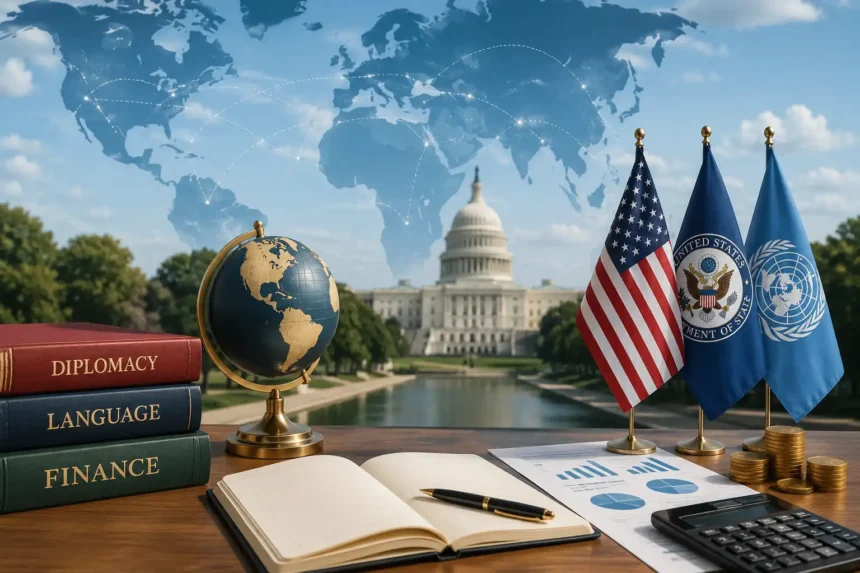
If you’ve searched for FSI blogs US, you’ve likely run into two very different worlds — one centered on the Foreign Service Institute, the U.S. government’s primary diplomatic training center, and another focused on the Financial Services Industry. Both are legitimate. Both serve distinct, valuable audiences.
- What Is FSI Blogs US?
- What Does FSI Blogs US Actually Cover?
- The FSI Teaching Method and Why It Works
- Types of FSI Blog Content and Official Channels
- Who Benefits From FSI Blogs US?
- How to Access and Use FSI Resources Effectively
- Challenges, Criticisms, and Common Misunderstandings
- FSI Blogs US as an SEO and Digital Content Strategy Tool
- Future Trends in FSI Blogs US
- Conclusion
- FAQs
This guide breaks down what each version covers, who benefits from it, and how to actually use these resources — whether you’re learning Mandarin for a diplomatic post or tracking fintech regulation changes for your firm.
What Is FSI Blogs US?
The term carries a dual identity, and understanding that distinction saves a lot of confusion.
The Foreign Service Institute (FSI) was established in 1947 and operates out of the George P. The Shultz National Foreign Affairs Training Center in Arlington, Virginia. Run by the US Department of State, it trains Foreign Service Officers, Civil Service workers, and other diplomatic staff in over 70 languages, area studies, leadership, protocol, and consular operations. Its language difficulty rankings — which classify languages from Category I (Spanish, French, 24–30 weeks) to Category IV (Arabic, Mandarin, Japanese, Korean, 88 weeks) — are among the most cited in linguistics.



The Financial Services Industry (FSI) interpretation refers to specialized blogs and digital publications covering banking, insurance, investment, and fintech. These platforms serve compliance officers, analysts, fintech entrepreneurs, and financial decision-makers who need more depth than mainstream finance news provides.
Foreign Service Institute — The Diplomatic Training Meaning
FSI doesn’t operate like a traditional blog publisher. Its content appears across government portals, internal systems, and curated public archives. What makes it authoritative is simple — the material was built to train real diplomats. The language difficulty rankings alone, developed from decades of actual classroom data, carry institutional credibility few private publishers can match.

The institute covers more than language. Leadership training, cultural competency, consular operational skills, and protocol knowledge are all part of the curriculum. For anyone researching how the US prepares its diplomatic staff, FSI content is the primary source.
Financial Services Industry — The Finance Meaning
On the financial side, FSI blogs US typically come from consulting firms, financial media companies, former regulators, and independent analysts. They cover market trends, regulatory updates, digital transformation, and risk management — written for professionals who need precise, applied information rather than general overviews.
What Does FSI Blogs US Actually Cover?
The content range is wider than most people expect.
Language Learning and Linguistic Resources
FSI’s language materials are publicly available, and that’s where most independent learners start. The institute released a large portion of its training materials into the public domain — audio courses, grammar guides, vocabulary PDFs, and drill-based exercises covering languages from Spanish to Amharic.
Key platforms hosting these materials include:
| Platform | Languages Available | Format |
| Live Lingua | 49+ languages | Audio + PDF |
| Yojik (fsi-languages.yojik.eu) | 40+ languages | Audio + PDF |
| Internet Archive | Variable | Audio + PDF |
| fsi-language-courses.net | Broad selection | Audio + PDF |
Courses follow Category I through IV structure. Category IV languages like Arabic, Mandarin, and Japanese require up to 88 weeks of full-time study — that figure comes directly from FSI training data, not estimates.
Diplomatic Training and Career Development
Beyond language, FSI content covers diplomatic scenario simulations, FSOT preparation, negotiation courses, and the full arc of a Foreign Service career. The FSI Transition Center blog specifically addresses challenges unique to diplomatic families — overseas relocation, third-culture kids, and re-entry into US life after extended postings abroad.
The Foreign Service Journal, while separate from FSI, regularly features firsthand accounts from active and retired diplomats that add real-world context to what official training materials describe more formally.
Finance, Fintech, and Regulatory Insights
On the financial side, these blogs cover a wide range. Topics frequently include:
- Digital banking and the rise of neobanks
- Open banking frameworks and API integration
- AI-driven lending and blockchain payment systems
- Fintech brands like Stripe, Plaid, Chime, and Varo
- Regulatory bodies — SEC, FINRA, OCC, CFPB — and frameworks like Dodd-Frank and Basel III
- AML compliance, KYC requirements, and regtech adoption
- ESG investing and risk management strategies
Global Policy, Technology, and Innovation
A growing segment of FSI-related content addresses the intersection of geopolitics and financial systems. National security, foreign policy dynamics, and macroeconomic indicators like interest rates and inflation all appear regularly. Content on AI, cybersecurity, cloud computing, and sustainable investing reflects how rapidly this space is evolving.
The FSI Teaching Method and Why It Works
Understanding FSI’s approach explains why so many independent learners gravitate toward its materials even decades after they were produced.
Immersion Over Translation
The core principle is simple: stop translating and start thinking in the target language. From day one, FSI students use the language to accomplish tasks — not to practice grammar in isolation. Drills focus on repetition and variation, building muscle memory rather than memorized phrases.
This differs sharply from most academic language programs, where grammar theory often precedes actual conversation by weeks. The speak-first mentality FSI promotes has been consistently validated by learners who document real progress using these free materials.
Recording yourself and comparing to the audio files is a small step that pays off significantly. It’s one of those practical habits that separates learners who progress quickly from those who plateau early.
The Inseparability of Language and Culture
FSI’s area studies component reflects a belief that language fluency without cultural context produces limited diplomats. Social norms, formal pronouns, historical context, and political dynamics all shape how language functions in practice.
Blog content exploring this holistic approach tends to resonate with serious learners because it addresses something most language apps ignore — the social infrastructure behind vocabulary.
Types of FSI Blog Content and Official Channels
Official FSI and State Department Resources
The most authoritative content lives on State Department-connected platforms:
- DipNote — the State Department’s official blog covering foreign policy and diplomatic priorities
- FSI Transition Center blog — focuses on family relocation, re-entry, and career transition
- Foreign Affairs IT blog — addresses digital transformation, cybersecurity, and technology supporting overseas missions
- Foreign Service Journal — published by AFSA, it features perspectives from active and retired diplomats
Much of FSI’s internal training content isn’t publicly accessible, but these channels provide the clearest window into how US diplomatic education actually operates.
Personal Blogs and Student Narratives
Some of the most genuinely useful FSI content comes from Foreign Service Officers and their families documenting the experience in real time. These blogs cover the emotional arc of intensive language training — the plateau weeks, the camaraderie between classmates, practical advice on oral assessments, and what life near the training center actually looks like.
This kind of content demystifies diplomatic life in a way no official publication can replicate.
Third-Party and Community Platforms
The language learning community has built a strong ecosystem around FSI materials. Live Lingua and Yojik keep the course archives maintained and searchable. Community forums crowdsource updated supplementary resources — podcasts for Turkish, YouTube channels for Japanese — filling gaps the original materials leave in modern conversational practice.
Who Benefits From FSI Blogs US?
Language Learners and Independent Studiers
Anyone serious about learning a language without expensive software will find FSI materials worth the initial effort. Pairing the core audio and PDF content with tools like Pimsleur, Glossika, or FluentU covers what the older FSI recordings lack in modern audio quality and natural conversation.
Diplomats, Government Workers, and Military Personnel
Over 40 US government groups send employees through FSI training annually. Intelligence analysts, USAID workers, and military personnel with qualifying status access programs unavailable to the public. The Transition Center specifically supports Foreign Service families navigating relocation cycles, third-culture kid education, and spousal career challenges.
Finance and Business Professionals
Compliance officers tracking regulatory changes, fintech entrepreneurs spotting early market signals, and wealth managers preparing client materials all rely on FSI finance blogs. The depth distinguishes them from general finance news — particularly for topics like KYC requirements, Basel III compliance timelines, or ESG investment frameworks.
Students, Researchers, and Academics
Political science and MBA students regularly reference FSI content in academic work. The language difficulty data appears in linguistics research. Finance blog content serves thesis projects, capstone research, and policy memo preparation in ways that mainstream coverage rarely supports.
How to Access and Use FSI Resources Effectively
Where to Find FSI Language Courses Online
Start with Live Lingua for the most organized interface or the Internet Archive for the broadest historical collection. Download audio files and PDFs directly — offline access removes dependency on platform availability. Begin with Unit 1 even if you have prior knowledge; the structure builds specific skills cumulatively.
How to Supplement FSI Courses for Maximum Results
FSI courses build strong grammar and pronunciation foundations, but modern conversational fluency requires additional input. Label objects around your home in the target language. Listen to native speaker podcasts during commutes. Use FluentU or similar platforms for authentic video content with interactive subtitles. Consistency over a few months outperforms intensive short bursts.
How to Find and Evaluate High-Quality FSI Finance Blogs
Credibility markers matter in financial content. Look for:
- Named authors with verifiable professional backgrounds
- Editorial oversight from recognized institutions
- References to regulatory agencies such as the CFPB or SEC
- Publishers like American Banker, McKinsey Financial Services, Deloitte Insights, or KPMG
Set up RSS feeds or newsletters from two or three trusted sources rather than broadly sampling dozens. Depth beats volume when the goal is professional application.
Applying FSI Blog Insights to Your Work
For finance professionals, the most practical use is translating regulatory updates into client communications and internal strategy documents. For language learners, consistent daily exposure — even 20 minutes — applied through FSI drills compounds into measurable proficiency gains faster than most expect.
Challenges, Criticisms, and Common Misunderstandings
The Pressure and Demands of FSI Training
The 88-week commitment for Category IV languages isn’t theoretical — it reflects full-time, high-stakes immersion with regular performance benchmarks. Burnout is a documented challenge. The competitive atmosphere inside actual FSI programs, while productive for diplomats operating under assignment pressure, can feel overwhelming when replicated independently without structured support.
Outdated Materials and Modernization Gaps
Some FSI course audio dates back to the 1960s and 1970s. Cultural references are outdated, and a few courses still reference communication methods long obsolete. The pedagogical structure remains sound, but learners need to supplement with contemporary materials to develop natural conversational fluency.
Common Misconceptions About FSI Blogs US
The biggest misconception is treating FSI as a conventional blogging platform. It isn’t. Most of its content exists as course archives, government publications, and institutional resources — not editorial posts. Public access is real but uneven. Some valuable content remains internal. Understanding this prevents frustration when expected blog-style content doesn’t exist.
FSI Blogs US as an SEO and Digital Content Strategy Tool
Topic Clusters and Pillar Page Structure
For organizations publishing FSI-adjacent content, a topic cluster model works best. A pillar page on fintech trends or diplomatic training links out to supporting articles on AI in lending, open banking, or FSOT preparation. This structure reinforces topical authority and improves internal linking coherence.
Keyword Research and Search Intent Mapping
High-intent keywords like “US fintech trends 2026” or “FSI language course Arabic” attract readers with specific goals. Long-tail variations tend to convert better than broad terms because they match professional research intent rather than casual browsing. Mapping content to intent — informational, professional research, or strategic decision — shapes both topic selection and depth.
On-Page and Technical SEO Best Practices
Strong FSI content includes primary terms in H1 and H2 headings, LSI terms like “regulatory compliance” and “digital transformation” distributed naturally through body content, and descriptive meta titles. Schema markup — particularly FAQ and article schema — improves rich result eligibility. Mobile responsiveness and page speed remain table-stakes ranking factors.
Future Trends in FSI Blogs US
AI-Powered Content and Personalization
AI tools are changing how FSI-related content gets created and consumed. Automated analysis speeds up regulatory coverage. Personalized content feeds built on user behavior and browsing history are replacing static newsletter models. Human editorial oversight remains essential for accuracy — particularly in compliance and diplomatic content where errors carry real consequences.
Multimedia, Interactive, and Live Formats
The most engaged audiences increasingly expect more than text. Podcasts, video series, webinars, and interactive data dashboards are becoming standard in serious financial and policy publishing. Live blogs during major summits or regulatory announcements borrow from journalism to deliver rolling expert analysis in real time.
Emerging Finance and Policy Topics for 2026
Topics dominating FSI finance content heading into 2026 include quantum computing applications in banking, AI ethics frameworks, climate risk disclosure requirements, DeFi developments, and zero-trust cybersecurity architecture. On the diplomatic side, energy diplomacy and global health policy are growing areas of focus.
Conclusion
FSI Blogs US spans two distinct but equally valuable domains. For language learners and diplomatic professionals, the Foreign Service Institute represents one of the most credible, freely accessible educational resources available anywhere. For finance and business professionals, FSI publications offer the kind of regulatory depth and analytical precision that mainstream media rarely delivers.
Whether the goal is learning Mandarin the way diplomats do, tracking compliance changes before they affect operations, or building topical authority through strategic content, understanding what FSI blogs actually are — and where to find them — is the first step toward using them effectively.
FAQs
FAQ 1: What does FSI stand for in FSI Blogs US?
FSI carries two meanings in this context. It refers to the Foreign Service Institute — the US Department of State’s official training center for diplomats — and to the Financial Services Industry, which covers banking, insurance, investment, and fintech. The correct interpretation depends on the specific blog or resource you’re looking at.
FAQ 2: Are FSI language courses really free and publicly available?
Yes. Because the US government produced these materials, they entered the public domain and can be freely distributed. Platforms like Live Lingua, Yojik, and the Internet Archive host audio files and PDFs covering 40 to 49 languages at no cost. Quality varies by language and production era, but the core content is fully accessible.
FAQ 3: How long does FSI language training take?
Training length depends entirely on the target language. Category I languages like Spanish and French require 24–30 weeks. German falls in Category II at 36 weeks. Category III languages like Russian and Hindi take 44 weeks. Category IV languages — Arabic, Mandarin, Japanese, Korean — require 88 weeks of full-time study to reach professional proficiency.
FAQ 4: Can non-diplomats use FSI materials and benefit from FSI blogs?
Absolutely. The public domain language courses are specifically available for independent learners. Finance blogs under the FSI umbrella target professionals, students, investors, and business owners — not only specialists. Anyone willing to engage with structured, in-depth content gets real value from both categories.
FAQ 5: Who publishes FSI Blogs US content?
The diplomatic side involves FSI instructors, State Department staff, and Foreign Service Officers. Personal blogs come from active and retired diplomats and their families. On the financial side, publishers include consulting firms, fintech brands, former regulators, independent analysts, and think tanks like CSIS and Carnegie.
FAQ 6: What are the most trusted FSI Blogs US sources?
For finance: American Banker, McKinsey Financial Services, Deloitte Insights, and KPMG consistently maintain high editorial standards. For diplomatic content: DipNote, the Foreign Service Journal, and AFSA resources carry the strongest institutional backing and credibility.
FAQ 7: What topics will FSI Blogs US focus on in 2026 and beyond?
Financial coverage will prioritize quantum computing in banking, AI ethics, climate risk disclosure, open banking acceleration, DeFi developments, and zero-trust cybersecurity. Diplomatic and policy content will expand around energy diplomacy, global health policy, ESG frameworks, and the evolving use of AI in government operations.
FAQ 8: How can I use FSI blog content for my business or academic work?
Finance professionals can translate regulatory updates from trusted FSI sources directly into client communications, compliance reports, and strategic planning documents. Academics can cite FSI language data and policy analysis in thesis research and capstone projects. Content marketers can use FSI frameworks to build topic clusters that establish long-term topical authority in financial or diplomatic niches.