





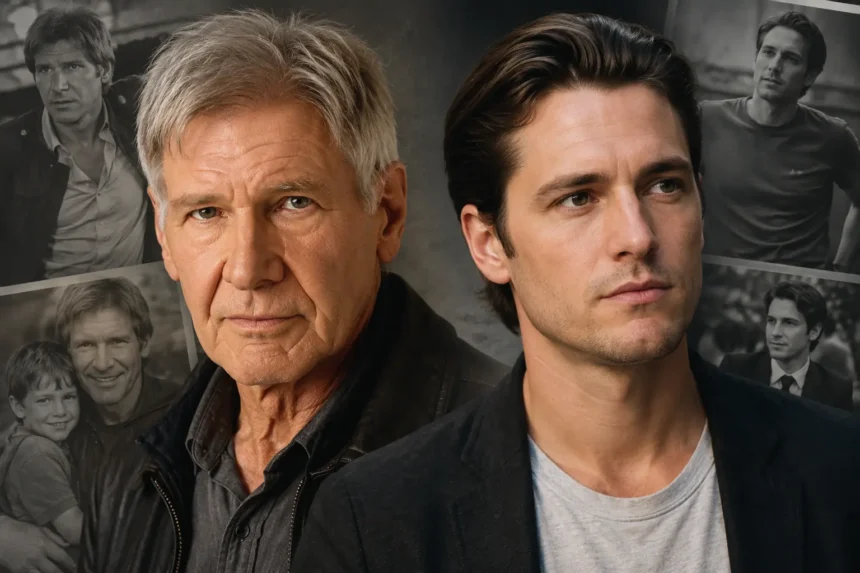
Willard Ford is not a name that trends on social media or appears on Hollywood red carpets. Yet his story is one of the more interesting in celebrity family culture — not because of fame, but because of its deliberate absence. As the second son of legendary actor Harrison Ford, he had every opportunity to follow his father into entertainment. He chose a completely different direction.
- Who Is Willard Ford? Quick Bio & Profile Summary
- Early Life and Family Background
- Education and Academic Foundation
- Choosing Entrepreneurship Over Hollywood
- Willard Ford’s Business Ventures
- Willard Ford’s Net Worth and Financial Overview
- Personal Life, Family, and Privacy
- Willard Ford vs. His Brother Benjamin Ford
- Willard Ford’s Skills, Values, and Personal Philosophy
- Public Perception, Legacy, and Impact
- Conclusion
- (FAQs)
Born on May 14, 1969, in Los Angeles, California, Willard built his identity through entrepreneurship — running a gym, launching a clothing brand, transforming a historic theatre, and co-founding a creative design company. His career reflects discipline, creative instinct, and a consistent preference for substance over spotlight.
This biography covers everything known about his life: family background, education, business ventures, personal values, and net worth.
Who Is Willard Ford? Quick Bio & Profile Summary
Before diving into the details, here is a quick reference for the key facts:



| Detail | Information |
| Full Name | Willard Ford |
| Date of Birth | May 14, 1969 |
| Age (2026) | 56–57 years old |
| Birthplace | Los Angeles, California |
| Nationality | American |
| Ethnicity | European roots |
| Father | Harrison Ford (Actor) |
| Mother | Mary Marquardt (Chef & Illustrator) |
| Siblings | Ben Ford, Malcolm Ford, Georgia Ford, Liam Flockhart |
| Children | Guiliana Ford, Eliel Ford |
| Marital Status | Married |
| Known Ventures | Strong Sports Gym, Ludwig Clothing, Kim Sing Theatre, Ford & Ching |
| Estimated Net Worth | $1–5 million |
| Social Media | No verified accounts |
| Residence | Los Angeles, California |
Early Life and Family Background
Growing Up in the Ford Household
When Willard was born in 1969, his father, Harrison Ford, was not yet a star. The family lived modestly, and Harrison worked as a carpenter to support them while pursuing small acting roles. That environment — grounded, work-focused, far from glamorous — shaped Willard’s early values in ways that Hollywood itself never could.
By the time Star Wars was released in 1977 and Indiana Jones followed shortly after, everything changed for the Ford family publicly. But Willard’s upbringing remained relatively private. His parents divorced in 1979, and despite his father’s exploding fame, life outside the cameras continued with simplicity and structure.



Growing up watching a parent navigate extraordinary public attention gave Willard an early, clear view of what fame costs — and what it distracts from.
Willard Ford’s Mother — Mary Marquardt
Mary Marquardt, Harrison Ford’s first wife and college sweetheart, is often overlooked in discussions about the Ford family. She worked as both a chef and an illustrator — creative pursuits that kept her grounded and away from industry circles.
Her influence on Willard appears significant. The qualities most associated with him — discretion, creativity, a preference for hands-on work — align closely with how those who knew Mary describe her. She modeled a low-profile life built on craft and calm, and her sons absorbed that.
Siblings — The Five Children of Harrison Ford
Willard is one of the five children Harrison Ford has across different relationships:
- Benjamin Ford (from Mary Marquardt) — older brother, professional chef, and owner of Ford’s Filling Station gastropub in Los Angeles
- Willard Ford (from Mary Marquardt) — entrepreneur and the subject of this biography
- Malcolm Ford (from Melissa Mathison) — musician and occasional actor
- Georgia Ford (from Melissa Mathison) — model and actress
- Liam Flockhart Ford (adopted with Calista Flockhart) — largely private
Each sibling chose a different path. None followed Harrison directly into blockbuster acting. Willard and Benjamin, in particular, took routes defined by creative independence rather than name recognition.
Education and Academic Foundation
Willard attended the University of California, Santa Cruz, graduating between 1987 and 1990 with a Bachelor of Arts in American Studies.
That degree is more relevant to his career than it might seem. American Studies combines history, cultural analysis, social identity, and communication skills that transfer directly into brand building, community-focused business, and space design. It trains people to think critically about culture, which is exactly what his business ventures required.
His education was not a stepping stone into entertainment. It became the intellectual foundation for independent thinking and a diverse career spanning fitness, fashion, and creative industries.
Choosing Entrepreneurship Over Hollywood
The most defining decision of Willard’s life was not something he did — it was something he consistently refused to do.
He had direct access to Hollywood connections through his father. He could have pursued acting, brand partnerships, or media appearances with relative ease. Instead, he built businesses in industries that interested him, without using the Ford name as leverage.
That choice reflects something deeper than mere modesty. Growing up close to fame — watching what public life demands of a person — appears to have clarified his priorities early. Authenticity over attention. Craft over celebrity. A self-directed route over an inherited one.
In an era where celebrity offspring routinely monetize their family names, Willard’s counter-narrative stands out as genuinely unusual.
Willard Ford’s Business Ventures
Strong Sports Gym — Building a Fitness Community
Strong Sports Gym was Willard’s most publicly recognized venture. Located in Los Angeles, the facility focused on serious athletic training — strength work, powerlifting, and mixed martial arts conditioning. It was not a commercial gym with cardio machines and pop music. It was a community-oriented space built for disciplined athletes.
The gym developed a loyal customer base and earned a solid reputation in LA’s fitness culture. For several years, it ran successfully and reflected Willard’s genuine interest in physical training and community building.
The COVID-19 pandemic ended that chapter. Lockdowns and public health restrictions hit small fitness businesses across the country hard, and Strong Sports Gym closed. It was a significant setback, but one that many gym owners shared during that period.
Ludwig Clothing Company — Building a Fashion Brand
Ludwig Clothing Company launched in Los Angeles’ Chinatown in 2009. The brand leaned into a Beethoven-inspired, irreverent aesthetic — premium-casual men’s wear with a distinct personality rather than a generic streetwear formula.
Opening a dedicated brick-and-mortar store in Chinatown rather than a mainstream retail district reflected smart brand positioning. The location suited the brand’s independent, creative community identity.
It was a lifestyle-oriented business — the kind built on taste and subculture rather than mass-market appeal.
Kim Sing Theatre — Transforming a Historic Space
This is arguably Willard’s most impressive business move, both creatively and financially.
The Kim Sing Theatre is a historic building in downtown Los Angeles, constructed in the early 20th century with real architectural significance. Willard acquired it and transformed it into a premium private event venue — hosting corporate events, brand launches, fashion shows, and art exhibitions for clients including BMW and Nike.
The numbers tell the story clearly: purchased for $300,000, eventually sold for $3.3 million. That kind of return reflects genuine strategic thinking — the ability to recognize undervalued space, add meaningful design and operational value, and position it for a premium market.
The project also demonstrated his commitment to historic preservation and the cultural richness of downtown LA.
Ford & Ching — Supporting Emerging Creatives
Ford & Ching operated across Los Angeles and New York, focusing on representing emerging creative designers. It was a less publicized venture but an important one, showing that Willard’s interest in design extended beyond his own brands to supporting and developing other creative voices.
The bicoastal setup indicated ambition and a genuine network across both US creative markets.
Willard Ford’s Net Worth and Financial Overview
Willard’s estimated net worth sits between $1 million and $5 million, though no figure has been officially confirmed. The $2 million estimate appears most frequently across credible sources.
His income came from several independent streams:
- Ludwig Clothing Company — retail and brand revenue
- Strong Sports Gym — membership and training fees (before closure)
- Kim Sing Theatre — event venue income and the eventual $3.3 million sale
- Ford & Ching — design representation work
- Real estate activity — property dealings in the Los Angeles market
What makes this notable is that none of it traces back to his father’s name or network. Every dollar reflects independently built and operated ventures across competitive industries.
Personal Life, Family, and Privacy
Children and Family Life
Willard is a father to two children — Guiliana Ford and Eliel Ford. He keeps their lives almost entirely out of public view. Their mother’s identity has never been publicly disclosed, and Willard does not discuss his family in interviews or media appearances.
By all accounts, he approaches parenting the same way he approaches business — with focus, consistency, and a preference for keeping meaningful things private.
Relationship with Harrison Ford
There is no public record of tension between Willard and his father. The relationship appears defined by mutual respect and shared values around privacy and authenticity.
What is clear is that Harrison Ford never placed Willard in the entertainment industry, and Willard never pursued that path himself. They appear to operate as a father and son who respect each other’s boundaries — a quiet, functional relationship that doesn’t require a public audience.
Why Willard Ford Chooses Privacy
Willard has no verified social media accounts. He gives no interviews. He avoids red carpets and public appearances almost entirely.
This is not accidental — it represents a sustained, decades-long commitment to a specific value system. Growing up adjacent to intense public scrutiny likely clarified the costs of overexposure. His consistent absence from public life reads not as shyness but as intention.
In a culture that rewards constant visibility, that level of discretion is increasingly rare.
Willard Ford vs. His Brother Benjamin Ford
The two sons of Harrison Ford and Mary Marquardt chose parallel but distinct paths.
Benjamin Ford became a celebrated chef and restaurateur — his Ford’s Filling Station gastropub in Los Angeles built him a recognizable public profile in the culinary world. He operates in a space adjacent to media and entertainment culture.
Willard moved in a quieter direction — fitness, fashion, historic preservation, creative design. Less media-facing, more hands-on.
Both built genuine careers independent of their father’s fame. The contrast between them illustrates that even within the same family, self-made identity can take very different but equally legitimate forms.
Willard Ford’s Skills, Values, and Personal Philosophy
What emerges across Willard’s career is a consistent set of operating principles:
- Discipline — every venture he built required sustained physical or creative effort
- Emotional intelligence — running a gym, representing designers, and managing event spaces all demand reading people accurately
- Patience — his career evolved organically, without shortcuts or shortcuts
- Resilience — the pandemic closed his gym; he did not disappear
- Discretion — across decades, his personal boundaries have never wavered
He has also worked as a fitness coach and mentor, guiding athletes not just in physical training but in the mindset required for long-term consistency. That mentorship reflects a broader philosophy — that meaningful growth happens through sustained effort, not rapid reinvention.
Public Perception, Legacy, and Impact
Willard Ford will not appear in film histories or celebrity magazines. His legacy operates on a different frequency.
For anyone interested in what it looks like to grow up next to extraordinary fame and choose a different metric for success, his story provides a compelling example. He built real businesses in competitive industries. He raised a family privately. He preserved a historic space in downtown Los Angeles. He supported emerging designers across two cities.
None of it required his father’s name. All of it reflects independent judgment, creative instinct, and long-term thinking.
In 2026, that counter-narrative feels more relevant than ever — a reminder that celebrity proximity does not define a person’s potential or their path.
Conclusion
Willard Ford’s life resists easy summarization. He is the son of one of Hollywood’s most iconic actors, yet he built his identity entirely outside that world. Through Strong Sports Gym, Ludwig Clothing, the Kim Sing Theatre, and Ford & Ching, he demonstrated that entrepreneurship, creativity, and discipline can produce a meaningful career without fame, without social media, and without a famous surname as the engine.
His story is not about rejection of his family — it is about self-determination. And that, more than any single business success, defines his enduring appeal.
(FAQs)
FAQ 1: Who is Willard Ford?
Willard Ford is an American entrepreneur and businessman born on May 14, 1969, in Los Angeles, California. He is the second son of actor Harrison Ford and Mary Marquardt. Rather than pursuing Hollywood, he built independent ventures across fitness, fashion, real estate, and creative design.
FAQ 2: What businesses has Willard Ford built?
His main ventures include Strong Sports Gym (a strength and MMA-focused facility in Los Angeles), Ludwig Clothing Company (a streetwear brand launched in LA’s Chinatown in 2009), the Kim Sing Theatre (a historic downtown LA venue he converted into a premium event space), and Ford & Ching (a bicoastal creative design representation company in Los Angeles and New York).
FAQ 3: Why didn’t Willard Ford become an actor like his father?
He never publicly explained the decision in detail, but his career choices consistently point toward a preference for hands-on, independent work over public performance. Growing up during his father’s rise to global fame appears to have given him a clear-eyed view of what that life demands — and he chose a different path.
FAQ 4: What happened to Strong Sports Gym?
Strong Sports Gym closed during the COVID-19 pandemic. Lockdowns and prolonged public health restrictions made it impossible for many small fitness businesses to survive, and his gym was among those forced to shut down.
FAQ 5: What is Willard Ford’s estimated net worth?
His net worth is estimated between $1 million and $5 million, with $2 million appearing most frequently in credible reporting. Income sources include Ludwig Clothing, the Kim Sing Theatre sale (sold for $3.3 million after being purchased for $300,000), and other real estate and business activities. No figure has been officially confirmed.
FAQ 6: Does Willard Ford have children?
Yes. He has two children — Guiliana Ford and Eliel Ford. He keeps both their lives and the identity of their mother entirely private.
FAQ 7: Is Willard Ford active on social media?
No. He has no verified social media accounts on any platform. This absence appears intentional and aligns with his long-standing commitment to personal privacy.
FAQ 8: How is Willard Ford’s relationship with Harrison Ford?
The relationship appears respectful and private. Neither father nor son has used the other for professional gain, and no public record of conflict exists. They seem to share a mutual appreciation for autonomy — a father and son who support each other without requiring a public stage to do it.